Photo: Natural Topaz
I recently went to a local mall and visited every jewelry store there. I was amazed at the lack of knowledge that every store attendant I talked to had about gemstones.
At one store I asked, already knowing the answer, what a particular stone was and how much it cost. The clerk told me it was cat's eye and it was $299. I asked "Cat's eye what? Cat's eye isn't a gemstone name. It is an adjective." She said "No, it is just called cat's eye". I gave up trying to explain at this point and just left.
In order to protect you from on onslaught of misinformation, I wrote this list of common terms used when it comes to gemstones.
Chatoyant: a band of light that moves across the stone as it is turned in a direct light. Tiger's eye is a great example. Synthetic ruby and sapphire are made to do it also.
Synthetic: Lab created to be an exact copy of a naturally occurring material. Synthetic diamonds are physically and chemically identical to natural diamonds.
Imitation: Made to look just like the real thing. An analog of a natural stone. Glass, porcelain, enamels, and other rocks are examples. Other types of imitations are ones with no natural analog. YAG, GGG, and CZ are examples. They are not trying to reproduce or copy a natural stone. They are making them for their own beauty.
Reconstructed & Reconstituted: In part made from real stones. Powder, dust, chips, and splinters are pressed into epoxy or plastic and fashioned into gemstones. Turquoise and Lapis are often reconstructed or reconstituted. Sometimes it is difficult to tell once the stones are polished.
Heat Treated: According to GIA (Gemological Institute of America) 98% of all naturally colored stones are heat treated. Sapphires are all ran through this process just to make sure they can't be improved. This treatment involves heating the stone to burn off any impurities that may be inside. It also has the effect of enhancing the color. If a stone is pale before the process, it will be a much more rich color when it comes out. This is the case with 100% of all Tanzanite. Tanzanite is normally a dull gray-green color until it is heat treated, which turns it the beautiful lavender we all like. (Tanzanite is also oiled to hide all the flaws--100% of the stones have flaws).
Enhanced Color: Any process that changes or improves the color of a stone. Heat treating is one way. Another enhancement is to soak a stone in oil or wax that has a artificial color which will soak into the stone changing or enhancing the color.
If you are going to purchase a gemstone or a piece of jewelry, make sure you research the stone. One jeweler I visited insisted that a certain stone I was looking at was a natural ruby. It was around 15 carats and was completely flawless with a paler shade of red than a ruby should have. I am sure it was a synthetic ruby. They insisted it was a natural, and at $5,000 was a bargain. If it had been a natural ruby, that quality and size would have made it around $250,000 per carat making the stone $3,750,000! Synthetics are much cheaper, and this stone (assuming it was a synthetic) should have cost about $15. This makes it quite the bargain for them, not for the buyer.
I'm sure there are other terms out there, so if you have questions about any of them please just ask. Rockshop@rocks4u.com.
Rick
Saturday, August 26, 2006


Friday, August 11, 2006
Topaz Mountain
Topaz Mountain is the southern most mountain in the Thomas Range which extends
from Tooele County to Juab County, in the central west desert of Utah.
Topaz Mountain is in Juab County.
It is the product of five distinct rhyolite flows cause by the extension of the
Basin and Range province. After the eruptions had occurred, hot gases
bubbled up through the fissures and cracks looking for a place to escape.
Some of the gases formed bubbles within the rhyolite. These bubbles are called lithophyses.
As the gases cooled, Topaz and other minerals would deposit on the sides of
the fissures and within the lithophyses.
There are a number of different minerals found in the Thomas Range,
including:
Topaz. Topaz is found in epithermal veins (epithermal means it was
deposited by hot ground water or steam). It forms as sherry-colored to
clear and pink. Crystals are 0.25" long to 3" commonly, though some have
been found up to 4" and one exceptional crystal was almost 5" long.
The color is caused by natural radiation. So when topaz is exposed to the sun
light, it fades out. The color can be replaced by re-exposing the crystals
to radiation such as x-rays.
Since the Topaz in the Thomas Range is located in a rhyolite, it often has
rhyolitic sand included within the crystal. There is NO way of cleaning
this off. Topaz crystals completely included with sand are called "sand
crystals."
Floaters are also common. This means that there is no visible point of
attachment and the crystal is terminated on all sides.
Topaz has a hardness of 8, specific gravity of 3.5, and has a strong basil
cleavage. Topaz is often confused with quartz. The quartz found in the
Thomas Range is very small (1/8") and topaz is orthorhombic where quartz is
hexagonal.
Red Beryl. Red beryl is a member of the beryl family, which also includes
aquamarine, heliodore, emeralds, morganite, and goshenite. It is by far the
rarest of all the beryl's. It is found in several places with in the Thomas
Range, including the Cove. It forms as red to red-orange to orange-violet
and pink hexagonal plates about 0.25" across and 1/16" thick. Larger ones
are rare.
Red Beryl was discovered by Maynard Bixby in the mid-1890's and hence is
often referred to as Bixbite. There is only one other documented locality for Red Beryl, and that is in the Wah Wah Mountains, also in Utah. The Wah Wah Mountains is the location that the gem material is found.
We have a great selection of Red Beryl for sale in the store.
Bixbyite. Was first discovered at what is known as the Maynard Claim. It
was discovered by Maynard Bixby at the same time he discovered the Red Beryl
also at the same location.
Bixbyite forms as black, lustrous cubes. Most are less than 0.25", though
in the past few years some exceeding 1" have been found on the north end of
the Thomas Range. Often the cubes have been naturally modified to have each corner faceted.
We have some great samples of Bixbyite for sale in the store.
Pseudobrookite. Pseudobrookite forms as slender black needles. Most are
under 0.25", though they have been found to 2". It is very difficult to
remove specimens of pseudobrookite off the rock, because when you hit the
surrounding rock, the needles pop off. Use a super glue and pour it all
over the pseudobrookite and the matrix while you are extracting the specimen
and when you get it home, soak it in acetone to remove the glue. No damage
will come to the crystals and you might end up with a keeper. Good sprays
of pseudobrookite from this location are among the finest in the world.
Weeksite. The Autunite #8 claim is the type-locality (meaning this is where the mineral was first discovered) for Weeksite. This location is marked on the topo maps of the area. It forms as yellow needles on chalcedony. Is weakly radioactive.
Durangite. Duranite is a rare mineral, and the best crystals in the world are
found in the Thomas Range.
Holfertite is a new mineral with its type locality in the Cove. It is
named after John Holfert who discovered it. Holfertite forms as very small,
bright yellow needles with the topaz and hematite. It is a uranium
silicate.
Other minerals that may be found in the Thomas Range are
Hematite, Garnets, Chalcedony, Cassiterite, Ilmenite, Fluorite, Magnetite,
Sanadine, Mimetite, Hyalite Opal, Crystobalite, Calcite, Fluorite, Rutile,
Amethyst, Zircon, and Trydimite
The Topaz Mountain area is still open to the amateur collector and here are
some pointers on finding the goodies:
This detailed information is for the Cove. There are many claims in the
Thomas Range. The Cove/Topaz Mountain is open to the amateur collecting.
That means nothing but hand tools. For more detailed information on rock hounding rules in Utah, see www.rocks4u.com/Utahrockhoundingrules.htm .
I am asked often if there is any more topaz to be found at Topaz Mountain.
YES. It just takes some skill in finding it.
The first thing you must know is that it takes patience, lots and lots of
patience. Topaz Mountain doesn't like to give up her treasures, so you must
have patience, and did I mention you must be patient?
Most of the topaz is found in the fissures and lithophysa pockets. Use a
long screw driver to probe cracks and the vugs. If the screw driver can be
moved around, then start working the fissure to open the pocket. Not all
will have topaz. And the ones that do may only have small and undesirable
topaz. Remember--be patient. Sometimes the sand and dirt will cover the
topaz in a vug, so make sure you blow or sweep the fissure out. Please be an ethical collector, and refrain from damaging specimens that you can't carefully remove. The next person may have the skills and tools to preserve the specimen.
Topaz from other locations around the world include the Zapot Claim in
Humbolt Co. Nevada where large crystals of blue topaz were discovered a few
years ago, Montana, Idaho, Colorado, California, Nevada, North Carolina,
and North and South Dakota. Brazil has produced topaz crystals to 1500 kg. Russia, and several African countries have also produced great specimens. Pakistan and Afghanistan have produced world class specimens also. Namibia produced the only true red topaz, the rarest of all. Idaho has produced great green topaz crystals which are exceptionally rare and even more rarely fluoresce under shortwave light this is rare in and of itself.
Rick
from Tooele County to Juab County, in the central west desert of Utah.
Topaz Mountain is in Juab County.
It is the product of five distinct rhyolite flows cause by the extension of the
Basin and Range province. After the eruptions had occurred, hot gases
bubbled up through the fissures and cracks looking for a place to escape.
Some of the gases formed bubbles within the rhyolite. These bubbles are called lithophyses.
As the gases cooled, Topaz and other minerals would deposit on the sides of
the fissures and within the lithophyses.
There are a number of different minerals found in the Thomas Range,
including:
Topaz. Topaz is found in epithermal veins (epithermal means it was
deposited by hot ground water or steam). It forms as sherry-colored to
clear and pink. Crystals are 0.25" long to 3" commonly, though some have
been found up to 4" and one exceptional crystal was almost 5" long.
The color is caused by natural radiation. So when topaz is exposed to the sun
light, it fades out. The color can be replaced by re-exposing the crystals
to radiation such as x-rays.
Since the Topaz in the Thomas Range is located in a rhyolite, it often has
rhyolitic sand included within the crystal. There is NO way of cleaning
this off. Topaz crystals completely included with sand are called "sand
crystals."
Floaters are also common. This means that there is no visible point of
attachment and the crystal is terminated on all sides.
Topaz has a hardness of 8, specific gravity of 3.5, and has a strong basil
cleavage. Topaz is often confused with quartz. The quartz found in the
Thomas Range is very small (1/8") and topaz is orthorhombic where quartz is
hexagonal.
Red Beryl. Red beryl is a member of the beryl family, which also includes
aquamarine, heliodore, emeralds, morganite, and goshenite. It is by far the
rarest of all the beryl's. It is found in several places with in the Thomas
Range, including the Cove. It forms as red to red-orange to orange-violet
and pink hexagonal plates about 0.25" across and 1/16" thick. Larger ones
are rare.
Red Beryl was discovered by Maynard Bixby in the mid-1890's and hence is
often referred to as Bixbite. There is only one other documented locality for Red Beryl, and that is in the Wah Wah Mountains, also in Utah. The Wah Wah Mountains is the location that the gem material is found.
We have a great selection of Red Beryl for sale in the store.
Bixbyite. Was first discovered at what is known as the Maynard Claim. It
was discovered by Maynard Bixby at the same time he discovered the Red Beryl
also at the same location.
Bixbyite forms as black, lustrous cubes. Most are less than 0.25", though
in the past few years some exceeding 1" have been found on the north end of
the Thomas Range. Often the cubes have been naturally modified to have each corner faceted.
We have some great samples of Bixbyite for sale in the store.
Pseudobrookite. Pseudobrookite forms as slender black needles. Most are
under 0.25", though they have been found to 2". It is very difficult to
remove specimens of pseudobrookite off the rock, because when you hit the
surrounding rock, the needles pop off. Use a super glue and pour it all
over the pseudobrookite and the matrix while you are extracting the specimen
and when you get it home, soak it in acetone to remove the glue. No damage
will come to the crystals and you might end up with a keeper. Good sprays
of pseudobrookite from this location are among the finest in the world.
Weeksite. The Autunite #8 claim is the type-locality (meaning this is where the mineral was first discovered) for Weeksite. This location is marked on the topo maps of the area. It forms as yellow needles on chalcedony. Is weakly radioactive.
Durangite. Duranite is a rare mineral, and the best crystals in the world are
found in the Thomas Range.
Holfertite is a new mineral with its type locality in the Cove. It is
named after John Holfert who discovered it. Holfertite forms as very small,
bright yellow needles with the topaz and hematite. It is a uranium
silicate.
Other minerals that may be found in the Thomas Range are
Hematite, Garnets, Chalcedony, Cassiterite, Ilmenite, Fluorite, Magnetite,
Sanadine, Mimetite, Hyalite Opal, Crystobalite, Calcite, Fluorite, Rutile,
Amethyst, Zircon, and Trydimite
The Topaz Mountain area is still open to the amateur collector and here are
some pointers on finding the goodies:
This detailed information is for the Cove. There are many claims in the
Thomas Range. The Cove/Topaz Mountain is open to the amateur collecting.
That means nothing but hand tools. For more detailed information on rock hounding rules in Utah, see www.rocks4u.com/Utahrockhoundingrules.htm .
I am asked often if there is any more topaz to be found at Topaz Mountain.
YES. It just takes some skill in finding it.
The first thing you must know is that it takes patience, lots and lots of
patience. Topaz Mountain doesn't like to give up her treasures, so you must
have patience, and did I mention you must be patient?
Most of the topaz is found in the fissures and lithophysa pockets. Use a
long screw driver to probe cracks and the vugs. If the screw driver can be
moved around, then start working the fissure to open the pocket. Not all
will have topaz. And the ones that do may only have small and undesirable
topaz. Remember--be patient. Sometimes the sand and dirt will cover the
topaz in a vug, so make sure you blow or sweep the fissure out. Please be an ethical collector, and refrain from damaging specimens that you can't carefully remove. The next person may have the skills and tools to preserve the specimen.
Topaz from other locations around the world include the Zapot Claim in
Humbolt Co. Nevada where large crystals of blue topaz were discovered a few
years ago, Montana, Idaho, Colorado, California, Nevada, North Carolina,
and North and South Dakota. Brazil has produced topaz crystals to 1500 kg. Russia, and several African countries have also produced great specimens. Pakistan and Afghanistan have produced world class specimens also. Namibia produced the only true red topaz, the rarest of all. Idaho has produced great green topaz crystals which are exceptionally rare and even more rarely fluoresce under shortwave light this is rare in and of itself.
Rick
Monday, August 07, 2006
Gold Hill, Utah Home of Great Mineral Specimens
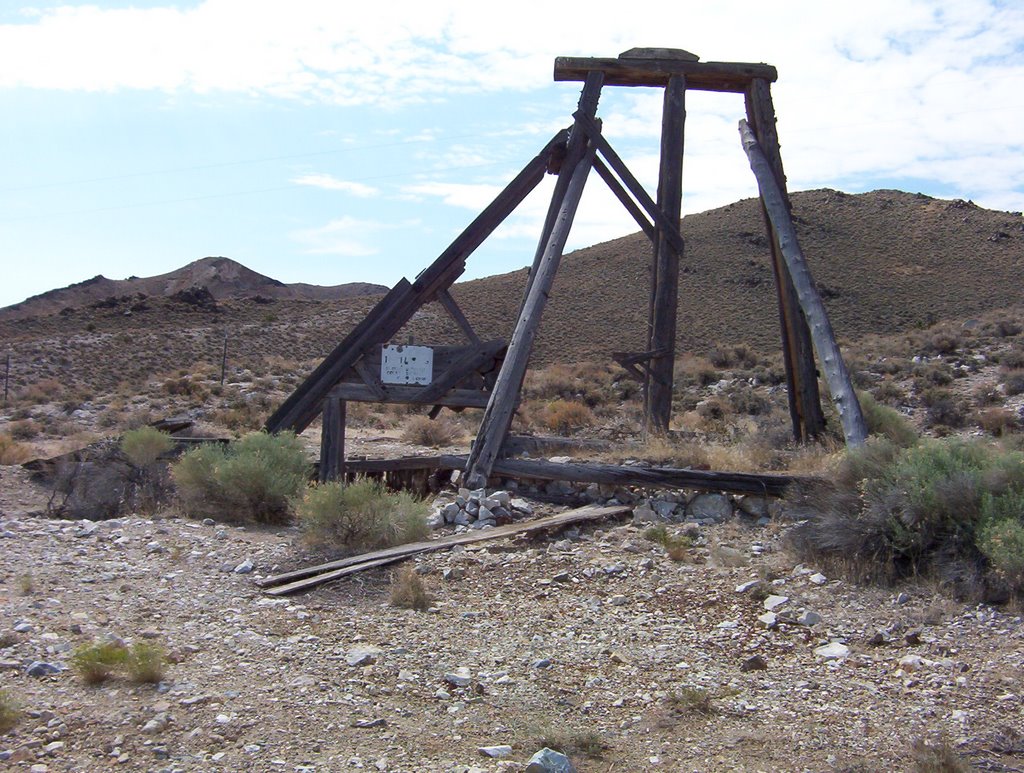
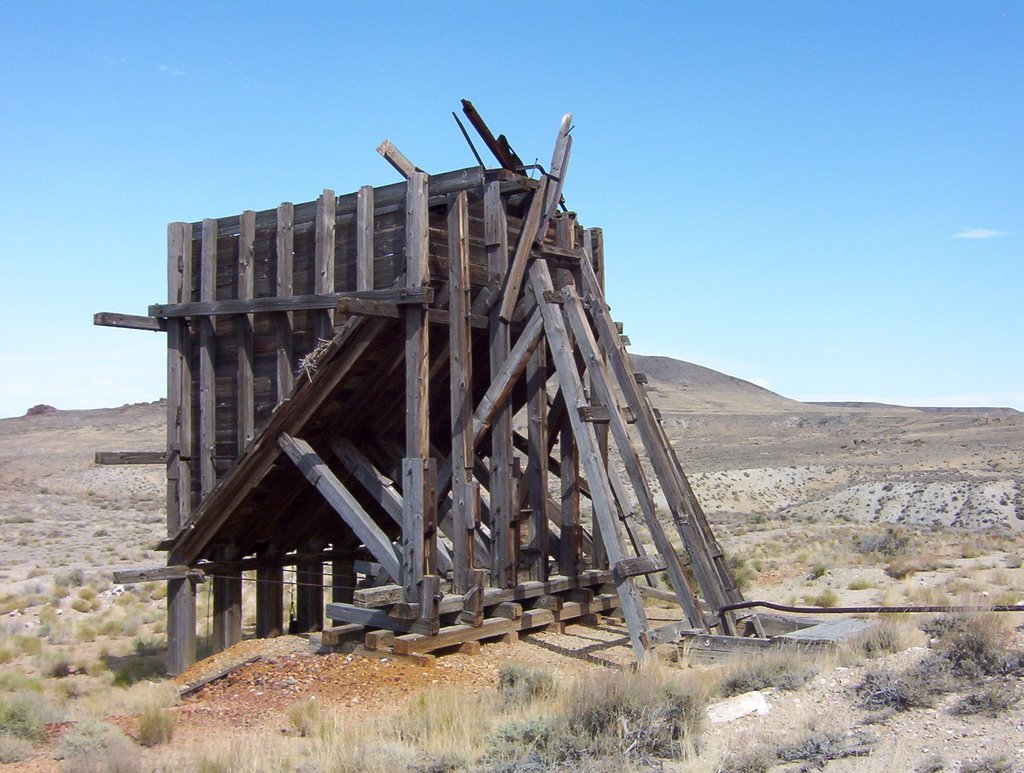
Gold Hill, Utah has provided mineral collectors and scientists with a wealth of material. Here are a few photos of the area. For more information see the Gold Hill page of our website at www.rocks4u.com/gold_hill.htm. Click the title of this article to link.

Saturday, August 05, 2006
Mineral Museum On-Line
Our Utah Mineral & Fossil museum display has been very popular with scouts, school groups, university students, and mineral collectors for years. Now we're bringing it to you over the web! Right now we have a small portion of it in pictures only. We'll be adding descriptions and lots more photos, so please bookmark the page and check back.
Click the title of the article to link, or use the Mineral Museum link to the right.
Click the title of the article to link, or use the Mineral Museum link to the right.
Thursday, August 03, 2006
Asbestos for Mineral Collectors
When we had our Phase 1 Environmental Survey done to purchase our new building, the bank sent a young "environmental scientist" to do a write up on our building. He stated that there was asbestos in the sheetrock, plaster, floor, and the cement. When I asked him what kind of asbestos he thought there was in all this stuff, he was a little confused. He thought that the rock dust created from crushing rocks to make the aggregate for the cement was asbestos. I tried to explain asbestos to him but he didn't really care. I thought was a shame that a so called scientist didn't care if he had the right information. As it turns out his whole company was a farce when it comes to doing environmental work.
So here is the skinny on asbestos.
Asbestos is not a mineral but a family of minerals. In ancient times it was referred to as "incombustible fabric" and " immortal linen."
During Roman times many dignitaries were wrapped in "linum vivum" (immortal linen) so the ashes could be collected after cremation.
Charlemagne had tablecloths made from this same material so that he could startle his guests by throwing the tablecloths into the fire to clean them after dinner. The tablecloths would come out clean and unburned. What a way to show off a little magic!
As I said earlier, asbestos is not one mineral. It is actually divided into 2 groups, 1. Chrysotile and serpentine, and 2. Amphibole minerals consisting of anthophyllite, amosite, crocidolite, tremolite, and actinolite.
Many of you are familiar with Tiger's Eye. This is basically petrified crocidolite with goethite and iron as coloring agents.
In modern times asbestos has been used to create a number of different materials that are fire-resistant, everything from roofing to baby clothes, floor tiles to ceiling tiles, gaskets, and filters.
The problem with it is that the fibers get imbedded into the lungs and the lungs can't get them out. After a short time scar tissue builds up around the fibers, making the lungs non-pliable. Once this happens you can't breathe and...well that is bad.
Of all the varieties of asbestos, only the short fiber varieties are "bad." The long fiber varieties are easily expelled from your lungs. The short ones (or long ones ground up and made short) are the ones that cause such a health risk. As items with these fibers start to deteriorate, the fibers become airborne.
So the trick to avoiding suffocation is to make sure you are not breathing the dust. People who have it in their homes, offices, cars, etc. can find comfort in the fact that you can cover it with paint, etc. and that illiminates the deterioration of the product, and therefore the health risk.
If you suspect you have asbestos in or around your environment, you should consult with experts to determine your health risk.
Today there is almost no asbestos mined. The largest mine in the western hemisphere (in Quebec, Canada) closed last year.
We have hand samples of asbestos from Canada for sale. They are green serpentine with bands or layers of fiberous crocidolite. They are not really dangerous unless you peel them apart and snort the fibers. $5 each.
Legal disclaimer: This article is meant for entertainment only. Nothing in this article is meant to be environmental or medical advice, or replace the advice of environment or medical experts. Please consult a properly licensed expert before undertaking an asbestos contamination or removal project.
So here is the skinny on asbestos.
Asbestos is not a mineral but a family of minerals. In ancient times it was referred to as "incombustible fabric" and " immortal linen."
During Roman times many dignitaries were wrapped in "linum vivum" (immortal linen) so the ashes could be collected after cremation.
Charlemagne had tablecloths made from this same material so that he could startle his guests by throwing the tablecloths into the fire to clean them after dinner. The tablecloths would come out clean and unburned. What a way to show off a little magic!
As I said earlier, asbestos is not one mineral. It is actually divided into 2 groups, 1. Chrysotile and serpentine, and 2. Amphibole minerals consisting of anthophyllite, amosite, crocidolite, tremolite, and actinolite.
Many of you are familiar with Tiger's Eye. This is basically petrified crocidolite with goethite and iron as coloring agents.
In modern times asbestos has been used to create a number of different materials that are fire-resistant, everything from roofing to baby clothes, floor tiles to ceiling tiles, gaskets, and filters.
The problem with it is that the fibers get imbedded into the lungs and the lungs can't get them out. After a short time scar tissue builds up around the fibers, making the lungs non-pliable. Once this happens you can't breathe and...well that is bad.
Of all the varieties of asbestos, only the short fiber varieties are "bad." The long fiber varieties are easily expelled from your lungs. The short ones (or long ones ground up and made short) are the ones that cause such a health risk. As items with these fibers start to deteriorate, the fibers become airborne.
So the trick to avoiding suffocation is to make sure you are not breathing the dust. People who have it in their homes, offices, cars, etc. can find comfort in the fact that you can cover it with paint, etc. and that illiminates the deterioration of the product, and therefore the health risk.
If you suspect you have asbestos in or around your environment, you should consult with experts to determine your health risk.
Today there is almost no asbestos mined. The largest mine in the western hemisphere (in Quebec, Canada) closed last year.
We have hand samples of asbestos from Canada for sale. They are green serpentine with bands or layers of fiberous crocidolite. They are not really dangerous unless you peel them apart and snort the fibers. $5 each.
Legal disclaimer: This article is meant for entertainment only. Nothing in this article is meant to be environmental or medical advice, or replace the advice of environment or medical experts. Please consult a properly licensed expert before undertaking an asbestos contamination or removal project.
Subscribe to:
Posts (Atom)